
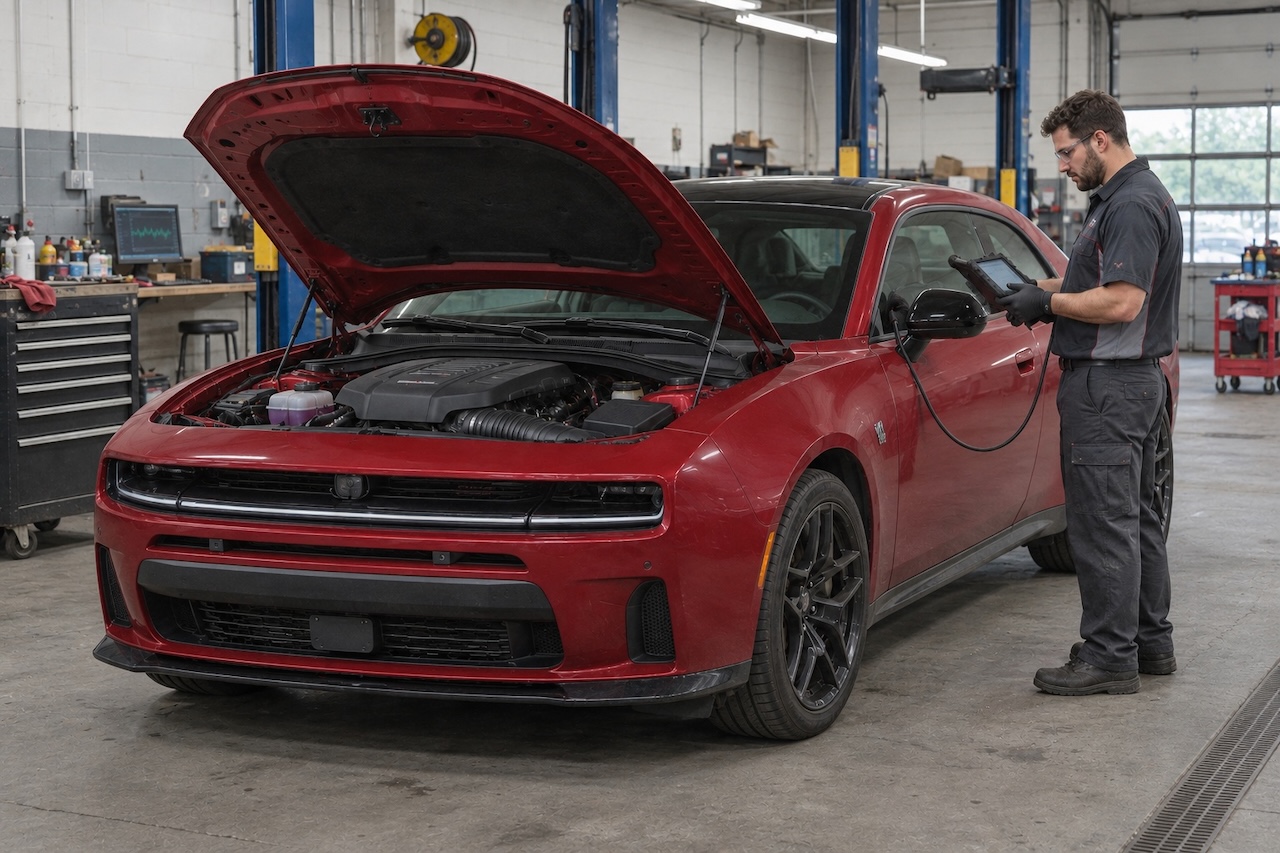
Pressing the gas and getting a delayed or weak response is frustrating, and there is rarely one simple answer, because many different things can cause it. It could be a fuel issue, a transmission issue, or something else entirely. Paulding Chrysler Dodge Jeep Ram Service Center diagnoses hesitation and sluggish acceleration for drivers in Dallas, GA, and this is a look at the common causes and what helps narrow them down.
Hesitation is a symptom, not a diagnosis. The engine needs the right mix of air, fuel, and spark at the right time, and the transmission needs to pass that power to the wheels smoothly. A problem with any of those can make the car sluggish when you accelerate from a stop, and several of them feel alike from the driver's seat. That is why guessing at a part usually does not work, and the same is true for a Dodge, Chrysler, Jeep, or Ram.
If the engine does not get enough fuel under load, it hesitates when you ask for power. A restricted filter, a pump that is not keeping pressure up, or injectors that are not spraying correctly can all do it. Hesitation that comes with rough running, or that gets worse under load, can point toward fuel delivery.
Key Takeaways
In an automatic, the transmission has to engage and shift smoothly as you pull away. Worn or low fluid, a failing component, or a shifting problem can make the car feel like it is slipping or taking a moment to respond. Delayed or harsh shifts, engine speed that rises without matching acceleration, and a burnt smell are reasons to have the transmission checked right away. Fluid is the first place to look, and it is one of the vehicle fluids drivers often forget.
Worn spark plugs or ignition coils can cause misfires that feel like hesitation. A dirty throttle body, a restricted air filter, or a failing sensor can throw off the air and fuel mix, and a restricted exhaust can choke the engine from the other end. Many of these set a stored fault code, and the check engine light may or may not be on, so a scan and a test drive tell far more than a single symptom. The maintenance and repair services at the service center include diagnostic work for Chrysler, Dodge, Jeep, and Ram vehicles.
| What You Notice | What It May Point To | Suggested Next Step |
|---|---|---|
| Hesitation with a check engine light | A stored fault from fuel, ignition, or a sensor | Have a diagnostic scan done |
| Delayed or harsh shifts | A transmission issue, including fluid | Have the transmission and fluid checked |
| Rough idle or a misfire | Ignition or fuel delivery | Have the ignition and fuel system inspected |
| Hesitation only when cold | A sensor or fuel mix concern | Note the conditions and have it diagnosed |
| Worse under load or uphill | Fuel delivery or restricted airflow | Have fuel pressure and the intake checked |
Car Hesitating From a Stop?
Describe when it happens and the team can start with the right tests.
The more detail you share, the faster the cause gets narrowed down. Note whether the hesitation happens cold or warm, from a stop or at highway speed, with the A/C on, or after fueling. Mention any warning lights, noises, or smells, and how long it has been going on. In north Georgia, summer heat, stop-and-go traffic, and the hills around Paulding County can make an existing problem show up more, so mention where you drive too. Drivers in Dallas, Hiram, Powder Springs, and Villa Rica can request an appointment online and describe the problem in their own words.
A car that hesitates or feels sluggish from a stop has many possible causes, from fuel to the transmission. Share the details, get it diagnosed, and fix the cause instead of guessing at parts.
If your car hesitates or feels sluggish when accelerating from a stop in Dallas, GA, the team can diagnose the cause and recommend the next step. Paulding Chrysler Dodge Jeep Ram Service Center serves Chrysler, Dodge, Jeep, and Ram drivers in Dallas, Hiram, Powder Springs, Villa Rica, and across Paulding County. Parts questions can go to the Parts Center, and the team can be reached through Contact Us. Regular maintenance helps prevent many of these problems, starting with how often to change the oil.