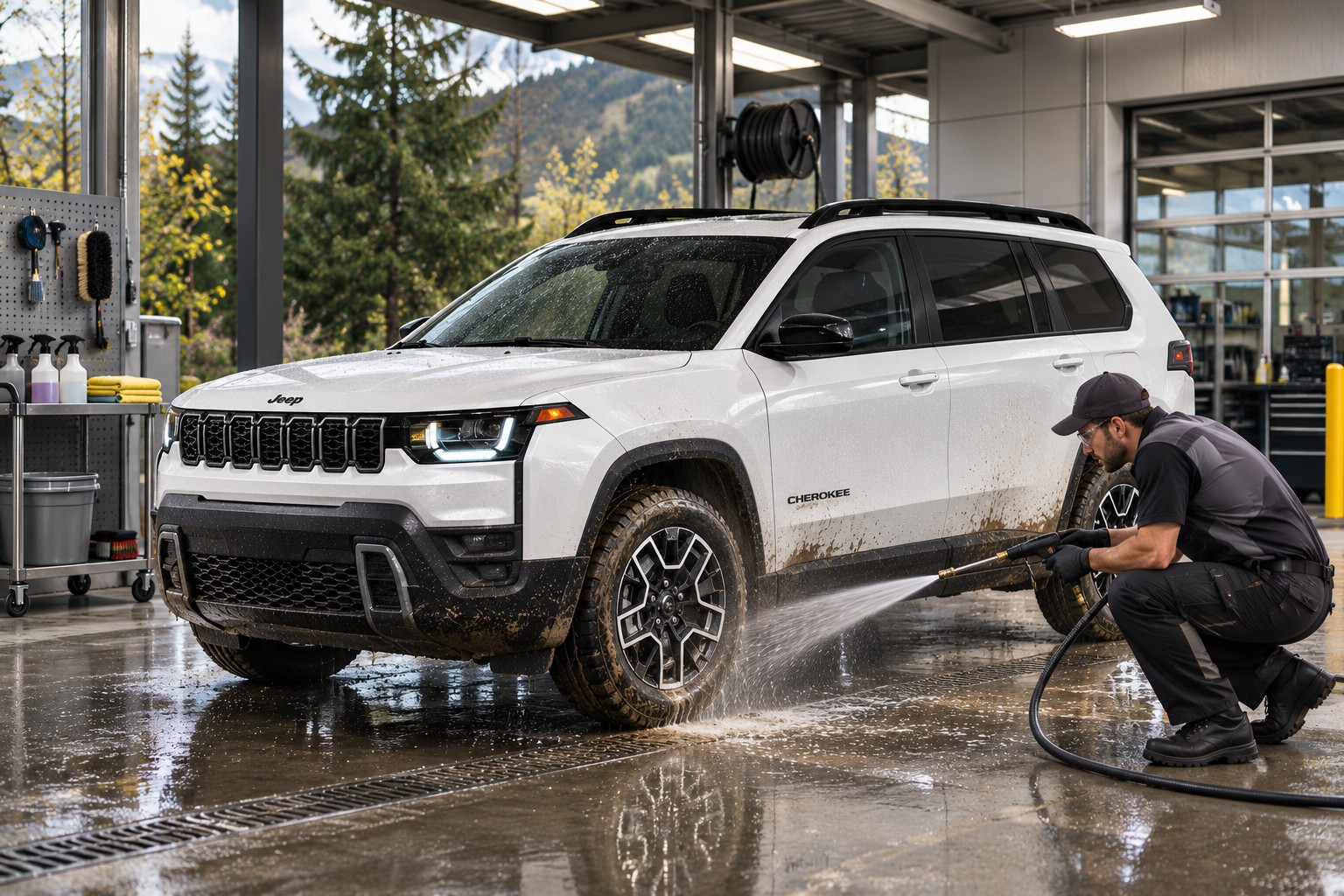
Quick Answer: After off-roading, wash your Jeep, including the wheels and the undercarriage, before you drive it every day again. Mud caked in the rims can cause poor ride quality, and a clean undercarriage helps a Jeep run well and last longer.
Off-roading is what a Jeep is built for, but the trail follows you home. Mud, dirt, and moisture stay packed in places you cannot see, and what you do in the day or two after the trip decides how your Jeep holds up. Paulding Chrysler Dodge Jeep Ram Service Center helps Dallas, GA drivers keep their Jeep in good shape after the trail, and the first step is a good wash.
Wash the Whole Jeep, Starting With the Wheels
Quick Answer: Washing is the first step after off-roading, and the wheels matter most. Mud caked in the rims can give you poor ride quality, so clean them out before you head back to the road.
Mud and dirt packed inside the wheels add uneven weight and can cause a rough or vibrating ride. Rinse the wheel barrels and the area behind them until the water runs clear. In north Georgia, red clay is sticky and dries hard, so it clings to wheels, fender liners, and suspension parts longer than loose dirt does. Wash soon after the trip instead of letting it dry, since dried clay is harder to remove and holds moisture against metal.
Keep the Undercarriage Clean
Quick Answer: A clean undercarriage is key to keeping a Jeep running well and lasting longer. Packed mud and debris trap moisture against metal parts and can hide damage.
The frame, skid plates, axles, driveshafts, and brake parts all collect mud on the trail. Spray out the undercarriage from front to back, and pay attention to the spots where debris packs in, such as around the control arms, behind the skid plates, and around the differential covers. Washing also makes problems easier to see, because a clean surface shows the scrapes, dents, leaks, and loose parts that mud was covering.
Key Takeaways
- Wash the wheels and undercarriage before you drive your Jeep every day again.
- Check the tires and the underside for damage and leaks.
- Heavy off-road use calls for differential and transfer case service sooner.
Look for Damage and Leaks After the Trail
Quick Answer: Check for damage and leaks while the undercarriage is clean. Look at the tires, the underside, and the ground under your Jeep for anything that was not there before the trip.
Look at each tire for cuts, bulges, and embedded rocks or sticks, and check the pressure, since trail driving often means airing down. Look underneath for bent or loose parts, torn rubber boots on the axles and steering, and fresh wet spots on the axles, transfer case, or engine. Listen on the first drive for vibrations, clunks, or noises that were not there before. Tires and wheels take the most abuse, and tire maintenance covers pressure and balance, while an alignment check shows whether a hard hit moved the wheel angles.
Post Off-Road Check in 5 Steps
- Wash the wheels. Rinse mud out of the wheels and from behind them.
- Clean the undercarriage. Spray out the frame, skid plates, axles, and suspension.
- Inspect the tires. Look for cuts, bulges, and trapped debris, and reset the pressure.
- Look for damage and leaks. Check for bent parts, torn rubber boots, and fresh wet spots.
- Drive and listen. Note any new vibration, clunk, or noise on the first drive.
| What You Notice | What It May Mean | What to Do |
|---|
| Vibration at higher speeds | Mud or debris on the wheels, or an unbalanced wheel | Clean the wheels, then have the balance checked if it continues |
| Pulling to one side | A hard hit that moved the alignment, or a tire problem | Have the alignment and tires inspected |
| A new clunk or rattle | A loose or bent part | Have the underside inspected |
| Wet spots under the Jeep | A leak from an axle, the transfer case, or the engine | Have the source found promptly |
| Grinding or whining from the axles | Worn or low fluid in a differential | Have the differentials and transfer case checked |
Just Got Back From the Trail?
Bring your Jeep in for a post off-road inspection and let our team take a look.
Schedule Service
Off-Roading Means Earlier Differential and Transfer Case Service
Quick Answer: Heavy off-roading puts extra stress on a Jeep, so the front and rear differential and the transfer case need service sooner. For a heavy off-road Jeep, Paulding Chrysler Dodge Jeep Ram recommends service every 30,000 miles.
The differentials and transfer case hold the gear fluid that keeps the drivetrain working, and trail driving puts extra stress on that fluid. A commuter Jeep follows a longer schedule, and a Jeep that sees heavy trail use should be serviced every 30,000 miles instead. Water crossings and deep mud are one more reason to have the fluid checked, which is why knowing when a Jeep needs differential service pays off for trail drivers. Trail drivers in Dallas, Hiram, Powder Springs, and Villa Rica face the same wet-weather mud, so the same habits apply across the area.
Washing the wheels and undercarriage, checking the tires and the underside, and keeping up with differential and transfer case service are what keep a Jeep running well after the trail.
Jeep Service in Dallas, GA
Paulding Chrysler Dodge Jeep Ram Service Center serves Chrysler, Dodge, Jeep, and Ram drivers in Dallas, Hiram, Powder Springs, Villa Rica, and across Paulding County. Parts questions can go to the Parts Center, and the team can be reached through Contact Us. Routine care matters off the trail too, starting with how often to change a Jeep's oil.
Jeep Off-Road Care Questions in Dallas, GA
What should I check on my Jeep after off-roading?
+
After off-roading, check your Jeep's wheels, tires, undercarriage, and the ground under it. Wash off the mud, look for cuts, bent parts, and leaks, and note any new vibration or noise.
Should I wash my Jeep after going off-road?
+
Yes, you should wash your Jeep after going off-road, including the wheels and the undercarriage. Mud caked in the rims can cause poor ride quality, and a clean undercarriage helps your Jeep last longer.
Why does my Jeep vibrate after off-roading?
+
A Jeep can vibrate after off-roading because mud or debris is packed in the wheels, a wheel is out of balance, or a tire or suspension part was damaged. Clean the wheels first, and have the balance and suspension checked if the vibration continues.
Can mud damage my Jeep?
+
Yes, mud can damage a Jeep over time, because it holds moisture against metal parts and hides scrapes and leaks. Washing it off soon after the trip helps prevent that.
How often does a heavy off-road Jeep need differential service?
+
Paulding Chrysler Dodge Jeep Ram recommends servicing the front and rear differential and the transfer case of a heavy off-road Jeep every 30,000 miles. A commuter Jeep follows a longer schedule.
Should I check my tires after off-roading?
+
Yes, check your tires after off-roading for cuts, bulges, and trapped debris, and reset the pressure. Trail driving often means lower pressure, and tires take the most abuse on rough ground.
What does red clay do to a Jeep?
+
Georgia red clay sticks to wheels, fender liners, and suspension parts and dries hard, which makes it harder to remove and keeps moisture against metal. Wash it off soon after the trip, and check the wheels for packed clay that can cause vibration in Dallas, GA and across north Georgia.
When should I bring my Jeep in after off-roading?
+
Bring your Jeep in after off-roading if you notice vibration, pulling, new noises, leaks, or tire damage, or after a hard hit or water crossing. A post-trail inspection finds problems before they get bigger.
Where can I get my Jeep checked after off-roading in Dallas, GA?
+
Paulding Chrysler Dodge Jeep Ram Service Center offers tire maintenance, alignment checks, and service fluids checks for Jeep vehicles. Request an appointment online and mention the off-road trip.